








- Home >
- Latest news >
- Wealth Tax in Spain 2026: Complete Guide for French Investors
Wealth Tax in Spain 2026: Complete Guide for French Investors
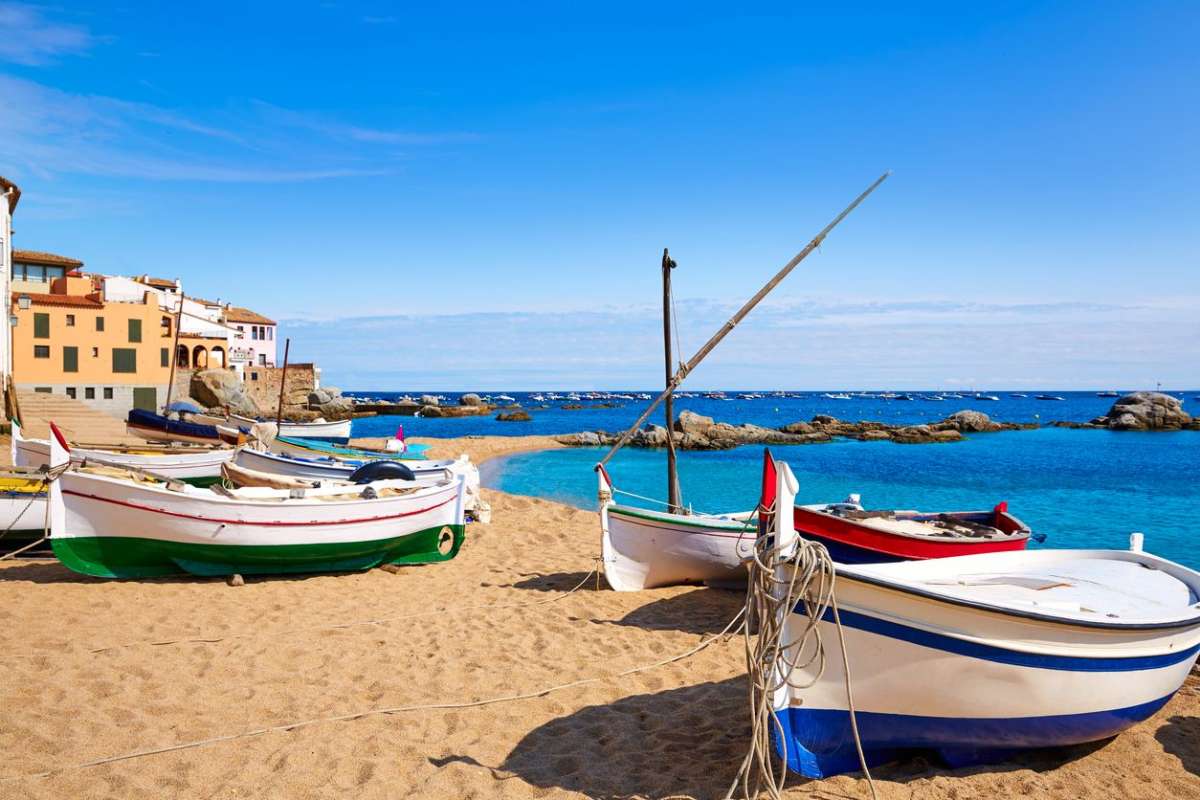
Real estate investment on the Costa Brava attracts thousands of French buyers every year, drawn by the Mediterranean climate, quality of life and attractive prices compared to the French Riviera. However, before finalising your acquisition project in Roses, Empuriabrava, Platja d’Aro or Cadaqués, it is essential to understand Spanish taxation, particularly the wealth tax. At IMMO 365 Costa Brava, we support our French clients in understanding these tax issues in order to optimise their investment.
This complete guide explains everything you need to know about wealth tax in Spain in 2025, also known as Spanish ISF, its regional specificities, and how Spanish wealth tax regulations can impact your real estate project.
What Is Wealth Tax in Spain?
Definition and Principles of the Impuesto sobre el Patrimonio
Wealth tax in Spain, officially known as the “Impuesto sobre el Patrimonio” (IP), is an annual tax levied on taxpayers’ net wealth as of 31 December each year. Unlike the French Impôt sur la Fortune Immobilière (IFI), which is limited to real estate assets, Spanish wealth tax applies to all assets owned by the taxpayer.
Assets subject to Spanish wealth tax include real estate (primary residences, second homes and rental properties), bank accounts and cash holdings, financial investments (shares, bonds, investment funds), luxury vehicles, boats and moorings, works of art and valuables, as well as rights and shareholdings in companies.
This fundamental difference from the French system is a key point of attention for French investors, who may be surprised to see their financial and movable assets also taxed in Spain.
Who Is Subject to Spanish Wealth Tax?
Two categories of taxpayers are liable for wealth tax in Spain. Spanish tax residents must declare their worldwide assets, whether located in Spain or abroad. Non-residents, on the other hand, are taxed only on assets and rights located in Spain.
For French non-residents who own a villa in Roses or an apartment in Empuriabrava, only these Spanish real estate assets and any financial assets held in Spain are included in the taxable base. This distinction is crucial for understanding your tax exposure.
One important point concerns the filing obligation: even if the calculated tax is zero due to regional exemptions, you are still required to file a declaration if the gross value of your assets in Spain exceeds 2 million euros. This filing obligation applies regardless of the amount of tax due.
Wealth Tax Thresholds and Allowances in Spain
The National Tax Threshold
The national threshold that triggers liability to Spanish wealth tax is set at 700,000 euros of net assets per person. This threshold applies after deducting debts linked to the assets. For married or civil-partnered couples, each spouse benefits from their own 700,000-euro threshold, effectively exempting up to 1.4 million euros of family wealth.
However, attention must be paid to regional specificities: some autonomous communities have lowered this threshold. In Catalonia, for example, the exempt minimum is 500,000 euros per person, 200,000 euros less than the national threshold.
Allowance on the Primary Residence
Spanish tax residents benefit from a specific allowance of 300,000 euros on the value of their primary residence. This substantial tax advantage significantly reduces the taxable base for owner-occupiers.
For example, a French couple settled in Platja d’Aro owns a primary residence valued at 800,000 euros and financial assets worth 600,000 euros. After applying the 300,000-euro allowance on the primary residence and the individual 700,000-euro thresholds for each spouse, the net taxable wealth becomes zero or very low depending on the region.
However, this allowance applies only to Spanish tax residents. Non-residents who own a second home on the Costa Brava cannot benefit from it.
Major Regional Differences: Catalonia vs Madrid
The Decentralised Wealth Tax System
One of the most complex aspects of Spanish wealth tax regulation lies in its decentralised management. Although the framework is set at national level, each autonomous community has broad autonomy to modify tax brackets, grant rebates or even abolish the tax entirely.
This decentralisation creates striking tax disparities between regions, turning location choice into a major strategic decision for investors. Differences can amount to several thousand euros per year for the same level of wealth.
Catalonia: A Heavier Tax Burden
Catalonia applies one of the highest wealth tax regimes in Spain. The exemption threshold is reduced to 500,000 euros per person, compared to 700,000 euros nationally. The Catalan progressive scale ranges from 0.21% to 3.48% for the highest wealth brackets.
For a French non-resident owning a 2-million-euro villa on the Costa Brava in Catalonia, wealth tax can reach approximately 10,500 euros per year. This amount is added to other local taxes such as IBI (property tax equivalent) and IRNR (non-resident income tax).
Catalonia offers no significant regional rebate, unlike other autonomous communities. This fiscal policy finances regional public services but undeniably reduces the region’s tax attractiveness for high-net-worth individuals.
Madrid and Andalusia: Full Exemption
At the opposite end of the tax spectrum, the Community of Madrid and Andalusia grant a 100% rebate on wealth tax. In practice, this means the tax is entirely abolished for residents of these regions.
This exemption has turned Madrid into a true tax haven for Spanish and European fortunes. Many wealthy taxpayers have relocated to the capital to avoid wealth tax, triggering major political controversy with other regions.
For a French investor hesitating between the Costa Brava and the Costa del Sol (Andalusia), this tax difference can represent annual savings of several thousand euros. However, other factors must be considered, such as quality of life, proximity to France and local real estate market dynamics.
The Impact of Location Choice
At IMMO 365 Costa Brava, we regularly advise French clients on these tax trade-offs. For net wealth of 2 million euros in Spain, the annual difference between Catalonia and Madrid can reach 10,000 to 11,000 euros. Over a 10-year holding period, the cumulative gap exceeds 100,000 euros.
However, the Costa Brava offers advantages that more than compensate for this higher taxation for many investors: immediate proximity to France, a strong French-speaking community, exceptional quality of life, preserved coastline and authentic villages, and a dynamic real estate market with strong rental demand.
The Temporary Solidarity Tax on Large Fortunes (ITSGF)
A Second Complementary Tax
In 2023, the Spanish government introduced a new tax targeting very large fortunes: the Impuesto Temporal de Solidaridad de las Grandes Fortunas (ITSGF). Initially presented as temporary for 2023 and 2024, this tax was made permanent in 2025.
The ITSGF applies from net wealth of 3 million euros, after deduction of the 700,000-euro minimum exemption, resulting in an effective threshold of around 3.7 million euros. Progressive rates are 1.7% for wealth between 3 and 5.35 million euros, 2.1% between 5.35 and 10.7 million euros, and 3.5% above 10.7 million euros.
The Anti-Avoidance Mechanism
The ITSGF was designed to circumvent regional exemptions granted by Madrid and Andalusia. Its calculation mechanism is particularly strategic: regional wealth tax already paid is deducted from the national ITSGF. As a result, Catalonia residents who already pay regional wealth tax offset it against the ITSGF, while Madrid residents, who pay no regional wealth tax, must pay the full ITSGF.
In practice, for net wealth of 4 million euros, a Madrid resident will pay around 5,100 euros in ITSGF, while a Catalan resident will pay around 13,000 euros in total (regional wealth tax plus ITSGF supplement).
This reform triggered legal and political disputes. Madrid, Galicia and Andalusia filed appeals before the Constitutional Court, arguing that the national tax infringed on regional fiscal powers. These appeals were rejected, confirming the legality of the ITSGF.
Implications for French Investors
For French buyers on the Costa Brava, the ITSGF concerns only very high net worths. If you are considering acquiring a luxury property in Cadaqués or an exceptional villa in Roses and your total assets in Spain exceed 3.7 million euros, this tax will apply in addition to Catalan wealth tax.
It is therefore essential to integrate both levels of taxation into your tax planning. Our experts at IMMO 365 Costa Brava work with specialised tax advisors to optimise your ownership structure and legally minimise your tax burden.
Here is the faithful English translation, strictly respecting the original structure, headings, paragraphs and tone. No added formatting, no bullets, no emphasis, no rewriting.
Practical Calculation of Wealth Tax in Spain
Calculation Methodology
The calculation of Spanish wealth tax follows a precise methodology in several steps. First step: establish a complete inventory of your assets as of 31 December, valuing them at their market value (real estate, bank accounts, investments, etc.). Second step: deduct deductible liabilities (outstanding capital on mortgage loans, certain tax debts). Third step: apply the relevant allowances (300,000 euros on the main residence for residents, regional exempt minimum). Fourth step: apply the regional progressive tax scale to the resulting taxable base. Fifth step: check whether the Temporary Solidarity Tax on Large Fortunes (ITSGF) applies if your assets exceed 3.7 million euros.
Practical Example: French Non-Resident in Catalonia
Mr Dupont, a French tax resident, owns a villa in Roses valued at 1.2 million euros, acquired with a mortgage of which 300,000 euros remain outstanding. He also holds 100,000 euros in a Spanish bank account.
Calculation of the taxable base: property value (1,200,000 euros) + bank accounts (100,000 euros) – mortgage debt (300,000 euros) = 1,000,000 euros of gross assets. As a non-resident, Mr Dupont does not benefit from the main residence allowance. After deduction of the Catalan exempt minimum of 500,000 euros, his taxable base amounts to 500,000 euros.
Application of the Catalan progressive scale: the first brackets up to 500,000 euros are taxed at progressive rates ranging from 0.21% to approximately 1%. For a taxable base of 500,000 euros, the annual tax amounts to between 2,500 and 3,000 euros. In addition, IBI (local property tax, approximately 800 to 1,200 euros per year) and IRNR if the property is not rented out (imputed income tax, around 1,500 euros per year for such a property) must be added.
Practical Example: Resident Couple in Catalonia
Mr and Mrs Martin, Spanish tax residents living in Platja d’Aro, own their main residence valued at 900,000 euros (without mortgage), a rental apartment in Empuriabrava valued at 350,000 euros, and movable assets amounting to 800,000 euros.
Calculation of the taxable base for the couple: total gross assets of 2,050,000 euros. Deduction of the 300,000-euro allowance on the main residence reduces net assets to 1,750,000 euros. Each spouse declares separately: 875,000 euros each. After applying the Catalan exempt minimum of 500,000 euros per person, each spouse has a taxable base of 375,000 euros.
Application of the Catalan scale: for each spouse, the tax amounts to approximately 1,800 to 2,200 euros, resulting in a total household tax of around 3,600 to 4,400 euros per year. This burden remains manageable and lower than what it would have been under the former French ISF for equivalent assets.
Comparison with French Taxation: IFI vs IP
Fundamental Differences
The comparison between Spanish wealth tax and the French Impôt sur la Fortune Immobilière reveals major differences. The taxable base is the first key difference: the French IFI taxes only real estate, whereas Spanish wealth tax applies to the entire estate (real estate, financial and movable assets).
Thresholds also differ: 1.3 million euros for the French IFI versus 700,000 euros (500,000 euros in Catalonia) for Spanish wealth tax. Tax scales also vary: the French IFI ranges from 0.5% to 1.5%, while Spanish wealth tax ranges from 0.2% to 3.5% depending on the region. Finally, the allowance on the main residence is 30% in France (capped) compared to a fixed 300,000 euros in Spain.
Which Is More Advantageous?
The answer depends on the composition of your assets and your place of residence in Spain. For assets mainly consisting of real estate below 2 million euros, the French IFI is generally more favourable. For diversified assets with significant financial investments, the French IFI can be far more advantageous as it completely exempts movable assets.
For very large estates exceeding 5 million euros with a strong financial component and residence in Madrid or Andalusia, Spain can become attractive despite the ITSGF, as movable assets are fully exempt from tax in France. In Catalonia, for medium to large estates, the Spanish tax burden may be heavier than in France due to the broader tax base.
Developments in France: Towards a New Tax on Unproductive Wealth?
It should be noted that in November 2025, the French National Assembly adopted a reform project creating a tax on unproductive wealth that would resemble the Spanish model. This new French tax would apply not only to real estate but also to dormant assets: gold, jewellery, works of art, cryptocurrencies, uninvested cash, etc.
The proposed threshold would be 1.3 million euros with a flat rate of 1%. If definitively adopted, this reform would reduce the tax gap between France and Spain, making the two countries more comparable from a tax perspective.
Legal Tax Optimisation for Investors
Ownership Structure Strategies
Several legal strategies can be used to optimise wealth taxation in Spain. The choice of tax status (resident vs non-resident) must be carefully considered, as it determines the taxable base and applicable allowances. For couples, separate filing doubles exemption thresholds (2 x 700,000 euros instead of 700,000 euros).
Staggering property acquisitions can help remain below taxation thresholds in the early years. For residents, prioritising investment in the main residence maximises the 300,000-euro allowance. Active debt management (not repaying mortgages too quickly) helps reduce net taxable assets.
The Importance of Personalised Tax Advice
At IMMO 365 Costa Brava, we systematically recommend that our French clients consult a Franco-Spanish tax specialist before finalising their acquisition. The challenges are multiple: optimising the ownership structure (individual, SCI, company), anticipating changes in your asset situation, coordinating Spanish and French taxation to avoid double taxation, and planning the future transfer of the property.
Appropriate tax advice can save you several thousand euros per year while securing your investment legally. We work with a network of expert partners who perfectly understand the specificities of French investment in Spain.
Filing Obligations: Modelo 714
Who Must File?
In Spain, wealth tax is declared using form Modelo 714. You must file if you are a Spanish tax resident with net assets exceeding the regional threshold, or if you are a non-resident with assets in Spain exceeding 2 million euros in gross value (even if no tax is due).
Attention: even if you benefit from a full exemption in Madrid or Andalusia, you must still file if your gross assets exceed 2 million euros. Failure to file may result in significant penalties.
Timeline and Procedure
The Modelo 714 declaration is filed at the same time as the income tax return (Renta), generally between April and June each year. It covers assets held as of 31 December of the previous year. The procedure is fully digital via the Spanish Tax Agency website.
You will need your NIE (foreigner identification number), your digital certificate or cl@ve PIN to log in, and a detailed inventory of your assets and liabilities as of 31 December with the corresponding supporting documents (notarial deeds, bank statements, property valuations).
For non-residents, the declaration can be complex, especially the first time. Our partner tax specialists can assist you to ensure compliance and optimise your declaration.
Investing on the Costa Brava Despite Wealth Tax
A Tax to Be Put into Perspective
Although wealth tax in Spain, particularly in Catalonia, is broader than the French IFI, it should not be a deterrent to your real estate project on the Costa Brava. For the majority of French investors, the amount of this tax remains moderate and largely offset by the region’s advantages.
The Costa Brava offers exceptional value for money compared to the French Riviera, with prices per square metre often two to three times lower. Rental potential is excellent thanks to strong tourist demand, quality of life is outstanding with a privileged climate and rich cultural heritage, proximity to France facilitates travel and reassures investors, and the Catalan real estate market benefits from positive long-term dynamics.
IMMO 365 Costa Brava Support
Our agency IMMO 365 Costa Brava has been supporting French investors for nearly 50 years. We have in-depth knowledge of the tax and legal challenges of cross-border real estate investment. Our added value lies in transparent information on all costs, including taxation, a network of expert partners (tax advisors, notaries, lawyers), deep knowledge of the local markets of Roses, Empuriabrava, Platja d’Aro and Cadaqués, and personalised support from start to finish.
We help you anticipate all costs related to your acquisition: notary fees (approximately 10–11% of the price), IBI (annual property tax), wealth tax depending on your situation, IRNR (non-resident income tax), and community fees where applicable.
FAQ: Frequently Asked Questions on Wealth Tax in Spain
What is the threshold for wealth tax in Spain?
The national threshold is 700,000 euros of net assets per person. However, this threshold varies by region. In Catalonia, where the Costa Brava is located, it is reduced to 500,000 euros per person. For couples, thresholds are individual and can be combined. In Madrid and Andalusia, although the legal threshold exists, a 100% rebate makes the tax zero in practice. It is important to note that even if no tax is payable, you must file as soon as your gross assets exceed 2 million euros.
Does a French non-resident have to pay wealth tax in Spain?
Yes, non-residents are subject to wealth tax on assets located in Spain. Only assets located within Spanish territory are taken into account. If you own a second home in Roses with a net value exceeding 700,000 euros (or 500,000 euros in Catalonia after debt deduction), you will be taxable. The 300,000-euro main residence allowance applies only to Spanish tax residents. Non-residents benefit only from the regional exempt minimum. You must file even if no tax is due as soon as your gross assets in Spain exceed 2 million euros.
What is the difference between wealth tax (IP) and the Temporary Solidarity Tax on Large Fortunes (ITSGF)?
IP is the traditional regional tax that applies from 700,000 euros of net assets. Its scale and management depend on each autonomous community. The ITSGF is a complementary national tax created in 2023 and made permanent in 2025. It applies to assets exceeding 3.7 million euros (3 million plus the 700,000-euro exempt minimum). Wealth tax already paid at regional level is deducted from the ITSGF. As a result, Madrid residents who do not pay regional wealth tax must still pay the ITSGF, while Catalan residents pay regional wealth tax which is offset against the ITSGF. For assets exceeding 3.7 million euros, both taxes may apply under a complex mechanism.
How is wealth tax calculated in Catalonia?
The calculation follows several steps. First: add all assets as of 31 December (real estate, accounts, investments, etc.). Second: deduct deductible liabilities (mainly mortgages). Third: if you are a resident, deduct 300,000 euros for your main residence. Fourth: deduct the exempt minimum of 500,000 euros per person in Catalonia. Fifth: apply the Catalan progressive scale to the resulting taxable base. The scale ranges from 0.21% for the lowest assets to 3.48% for the highest. For net assets of 1 million euros after allowances, the annual tax ranges between 2,500 and 4,000 euros depending on the brackets applied.
Can I deduct my mortgage from the wealth tax base?
Yes, debts related to the acquisition of real estate are deductible from the taxable base. Only the outstanding capital as of 31 December is taken into account, not future interest. For example, if you buy a villa for 1.5 million euros with a mortgage of 500,000 euros and 400,000 euros remain outstanding as of 31 December, your net taxable assets will be 1.1 million euros (1.5 M – 0.4 M). This deductibility sometimes makes it advantageous not to repay your mortgage too quickly from a tax perspective. Personal debts not linked to assets (overdrafts, consumer loans) are generally not deductible. Consult a tax specialist to optimise your debt structure.
Is Spanish wealth tax higher than the French IFI?
It depends on your asset situation and your place of residence in Spain. For assets mainly consisting of real estate below 2 million euros, the French IFI is generally more favourable. For diversified assets with many movable assets (shares, bonds), the French IFI is clearly advantageous as it taxes only real estate. In Catalonia, for medium to large estates, the burden may be higher than the IFI due to the broader tax base and lower threshold. In Madrid or Andalusia, for assets below 3.7 million euros, the tax is zero thanks to regional rebates, making these regions very attractive tax-wise. Above 3.7 million euros, the ITSGF applies throughout Spain, reducing Madrid’s advantage.
What are the risks of failing to declare wealth tax?
Penalties for non-declaration or incorrect declaration are severe in Spain. In case of late filing, a surcharge of 5% to 20% of the tax due applies depending on the length of the delay. In case of omission or deliberate undervaluation of assets, penalties of 50% to 150% of the evaded amount may be applied. Late-payment interest is added at the statutory rate. In the most serious cases (proven fraud), criminal proceedings are possible. The Spanish tax authorities have access to banking and property information and carry out cross-checks. Automatic exchange of tax information between France and Spain makes concealment highly risky. The statute of limitations is 4 years, or up to 10 years in cases of proven fraud.
How can wealth tax be legally optimised in Spain?
Several legal strategies exist. For couples, separate filing doubles exemption thresholds. If you plan to become a Spanish tax resident, prioritise acquiring a main residence to benefit from the 300,000-euro allowance. Do not repay mortgages too quickly, as debts are deductible. For very large estates, an ownership structure via a company can be considered with a tax advisor, as certain professional shareholdings benefit from exemptions. Donation with dismemberment of ownership (bare ownership/usufruct) can reduce the taxable base. Finally, if taxation is a major criterion and your assets exceed 3 million euros, consider Andalusia rather than Catalonia. In all cases, consult a Franco-Spanish tax expert before structuring your investment.
IMMO 365 Costa Brava supports you in your real estate project in Roses, Empuriabrava, Platja d’Aro and Cadaqués. Our nearly 50 years of expertise and our in-depth knowledge of Franco-Spanish taxation ensure the success of your investment. Our French-speaking advisors provide transparency and professionalism at every stage.
Discover our available properties at immo365costabrava.com/en and benefit from comprehensive support including the tax aspects of your acquisition.
Contact us for a personalised study of your project and a tax simulation adapted to your asset situation.
Please complete the form by clicking below and our advisers will get back to you as soon as possible to discuss your project.
You can also contact us at +34 872 268 850