








- Home >
- Latest news >
- Why 2026 is a Key Year to Buy in Spain: Complete Costa Brava Guide
Why 2026 is a Key Year to Buy in Spain: Complete Costa Brava Guide
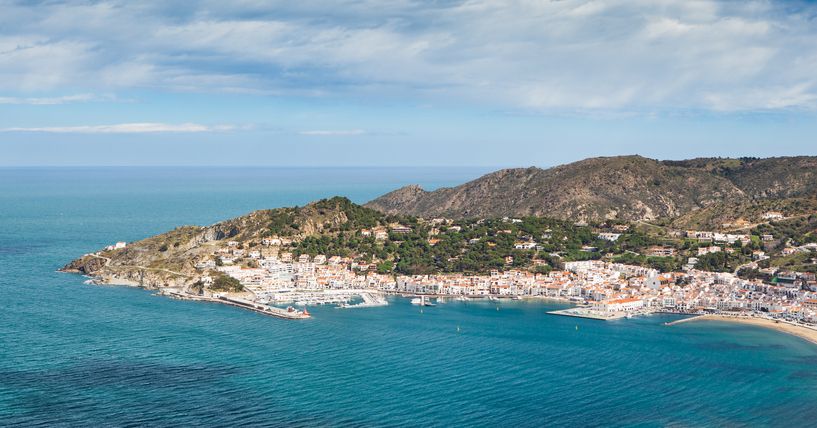
Buying in Spain in 2026 represents a unique strategic opportunity for international investors. Between the expected stabilisation of interest rates, the continued moderate appreciation of real estate, and major regulatory changes, this pivotal year offers an exceptional window of opportunity to position oneself in the Spanish market before inevitable further increases. On the Costa Brava, a preferred destination for foreign buyers, these national trends combine with favourable local dynamics to create a particularly attractive purchasing context.
At IMMO 365 Costa Brava, our expertise of nearly 50 years allows us to observe that the best years for acquisition are not those when prices are at their lowest (often synonymous with economic crisis and financing difficulties), but those where several positive factors converge: credit accessibility, economic dynamism, regulatory clarity, and predictable appreciation potential. The year 2026 brings together precisely these favourable conditions, particularly in the markets of Roses, Empuriabrava, Platja d'Aro, and Cadaqués, which we know intimately.
The 2026 Economic Context: A Favourable Stabilisation for Buyers
Price Growth Forecasts: A Moderate but Continuous Increase
The Spanish real estate market enters 2026 in a phase of stabilised growth after the spectacular acceleration of 2024-2025. Converging forecasts from leading analysts (CaixaBank Research, Banco de España, Idealista) anticipate an average national price increase between 4% and 6% for 2026, compared to the 10% to 16% recorded in 2025 depending on the region.
This moderation in price growth by no means signifies stagnation or a decline, but rather a normalisation of the market after several exceptional years. For buyers, this dynamic presents a major strategic advantage: acquiring in 2026 allows them to benefit from still reasonable prices before the cumulative increases of subsequent years. Medium-term projections (2027-2028) indicate continued appreciation at a similar pace, driven by solid structural fundamentals.
On the Costa Brava specifically, data from the Catalan market shows particular resilience in coastal areas. The scarcity of coastal land, sustained international demand (notably from French, German, and Dutch buyers), and the region's perennial tourist appeal maintain upward pressure on prices higher than the national average. Forecasts for 2026 place price growth between 5% and 7% in the prime markets of Roses, Cadaqués, and Platja d'Aro.
Concrete example: A villa in Empuriabrava valued at 450,000 euros at the beginning of 2026 will statistically reach 475,000 to 480,000 euros by the end of 2026 (+5.5%), then 500,000 to 510,000 euros by the end of 2027 (an additional +5.5%). Over a 3-year horizon (2026-2028), the cumulative appreciation could reach 16% to 18%, representing 70,000 to 80,000 euros in potential capital gains. Buying today rather than waiting therefore becomes economically rational.
Interest Rate Stabilisation: The Return to Normality
After the exceptional period of sharp interest rate hikes led by the European Central Bank in 2023-2024 to combat inflation, the year 2026 marks a turning point toward stabilisation, and even the beginning of a gradual easing. The 12-month Euribor, the benchmark index for Spanish mortgages, is expected to stabilise in a range of 2.5% to 3% according to the consensus scenario of financial analysts.
This stabilisation presents considerable advantages for 2026 buyers. Firstly, borrowing capacity becomes predictable and calculable over the long term, allowing for the calm planning of an acquisition project with bank financing. Fixed rates offered by Spanish banks (CaixaBank, Banco Sabadell, Banco Santander) stand around 3% to 3.5% for solid profiles, offering total security over the duration of the loan.
Secondly, although these rates remain higher than the exceptionally low period of 2019-2021 (when the Euribor was negative), they remain historically attractive compared to long-term averages (4% to 5% over the last 20 years). This window of moderate rates will likely not last indefinitely: in the event of new inflation or geopolitical tensions, a rate hike is always possible, significantly increasing the total cost of financed acquisitions.
For non-resident international buyers, 2026 financing conditions are characterised by a required personal down payment of 30% to 40% of the purchase price, a maximum duration of 20 to 25 years, and a maximum debt ratio of 35% to 40% of net income. These conditions, while more restrictive than for Spanish residents, remain accessible for solid financial profiles. Comparing Spanish banks and specialised brokers allows for optimising conditions and saving several thousand euros over the total duration of the loan.
Spanish Macroeconomic Context: Exceptional Resilience
The Spanish economy stands as a positive exception in Europe for 2026. Government forecasts point to GDP growth of 2.2%, significantly higher than the Eurozone average (estimated at 1.2% to 1.5%). This economic vigour rests on several structural pillars: a booming tourism sector (94 million visitors in 2024, a historical record), a competitive export industry, and growing attractiveness for foreign direct investment.
This economic health translates concretely for the real estate market into sustained domestic demand (Spanish households with the capacity to buy), a high employment level (unemployment rate below 12%, its lowest level since 2008), and renewed consumer confidence. These fundamental elements guarantee the solidity of the real estate market and minimise the risks of a sharp price correction in the short term.
The rating agency S&P recently raised Spain's rating outlook to "positive," recognising the country's good macroeconomic management and favourable fiscal trajectory. This international recognition strengthens Spain's attractiveness for foreign investors and reinforces the positive outlook for 2026-2028.
Major Regulatory Evolutions of 2026
End of the Golden Visa: Limited Impact but Opportunities for Europeans
Spain officially abolished the Golden Visa programme in 2025, removing the possibility for non-EU investors to obtain a residence permit in exchange for a real estate investment of at least 500,000 euros. This political decision, motivated by concerns about housing accessibility for local residents, marginally modifies the demand structure in the Spanish market.
For European buyers, this abolition paradoxically constitutes an indirect opportunity. Demand from Chinese, Russian, or Middle Eastern investors who benefited from the Golden Visa is shifting to other destinations (Portugal, Greece, Italy), slightly reducing competitive pressure on the Spanish luxury segment. High-end properties (prestige villas, premium first-line apartments) could experience a moderation in their appreciation rate, creating negotiation opportunities for savvy buyers.
On the Costa Brava, the impact of the Golden Visa was relatively limited compared to destinations like Marbella, Madrid, or Barcelona, which attracted the bulk of these international investors. The local market therefore remains mainly oriented toward European buyers (French, German, Dutch, Belgian, British) who are not affected by this regulatory change and benefit from free movement within the European Union.
Regulation of Holiday Rentals: Stabilisation After Restrictions
The regulation of holiday rentals in Spain, and particularly in Catalonia, underwent significant tightening in 2024-2025. The year 2026 marks a phase of regulatory stabilisation after these major changes, allowing investors to operate within a clarified and predictable legal framework.
In Catalonia, the HUT (Habitatge d'Ús Turístic) licence system is now fully operational with strict municipal quotas (a ratio of 10 tourist accommodations per 100 inhabitants in 262 municipalities). Costa Brava municipalities (Roses, Cadaqués, Platja d'Aro) apply these rules rigorously, limiting the granting of new licences. This restriction paradoxically creates an appreciation of properties already licensed, which have become rare and sought-after assets.
For 2026 buyers, two strategies are available: prioritise the acquisition of properties already endowed with a transferable HUT licence, guaranteeing the possibility of immediate and perennial holiday rental operation, or position oneself in the long-term rental market (annual lease), which is also experiencing strong demand and interesting yields without the regulatory constraints of holiday rentals. Both approaches present viable economic and heritage advantages in 2026.
New Payment and Traceability Rules: Reinforced Transparency
The year 2026 sees the entry into force of new traceability rules for real estate payments in Spain, strengthening market transparency and fighting against illegal practices still observed (undeclared cash payments, under-declaration of the sales price). These measures, while slightly increasing administrative formalities, benefit buyers by legally securing transactions.
Automatic real estate transaction declaration platforms now allow tax authorities to instantly cross-reference information between notaries, land registries, and the tax administration. This digitalisation drastically reduces the possibilities of fraud and guarantees buyers the acquisition of legally and fiscally "clean" properties. Unscrupulous sellers who previously attempted to minimise the declared price to reduce their capital gains taxes are now easily detectable and punishable.
For international buyers, these regulatory evolutions also facilitate compliance with their home country reporting obligations. Reinforced traceability simplifies the supporting documents to be provided to tax authorities and minimises the risk of audits.
Why the Costa Brava Specifically in 2026?
A Market Still Accessible Compared to Other Spanish Coasts
In 2026, the Costa Brava presents a major competitive advantage: a significantly higher quality-price ratio than other popular Spanish coastal destinations. While the Costa del Sol (Marbella, Málaga) shows average prices of 3,500 to 4,500 euros/m² and the Costa Blanca (Alicante, Torrevieja) reaches 2,500 to 3,000 euros/m², the Costa Brava offers properties of equivalent quality between 2,200 and 3,200 euros/m² depending on the sector.
This relative discount is explained by several historical factors: a later discovery by mass tourism, stricter environmental preservation limiting construction, and an orientation toward more qualitative rather than quantitative tourism. For 2026 buyers, this situation constitutes a geographical arbitrage opportunity: acquiring in a market that is still accessible before appreciation catches up with competing coasts.
Long-term forecasts (2030 horizon) anticipate a progressive convergence of prices between the different Spanish Mediterranean coasts, driven upward by the increasing scarcity of coastal land and sustained international demand. Buying in 2026 on the Costa Brava therefore allows for positioning before this convergence, maximising medium-term capital gain potential.
An Exceptionally Preserved Natural and Cultural Heritage
The Costa Brava stands out for the exceptional preservation of its natural and cultural heritage, unlike other Mediterranean destinations that fell victim to massive concrete development in the 1960s-1980s. Protected natural spaces (Cap de Creus Natural Park, Aiguamolls de l'Empordà Natural Park, Natura 2000 zones) cover more than 30% of the coastline, guaranteeing the permanence of the emblematic landscapes that define the territory's value.
This preservation is not only environmental but also cultural. The medieval villages of the hinterland (Pals, Peratallada, Monells, Begur) maintain their architectural authenticity and Catalan identity. Historic seaside resorts (Cadaqués, Tamariu, Llafranc) have managed to develop qualitative tourism that respects their character. This heritage quality constitutes a major intangible asset that durably enhances real estate investments in the region.
For a 2026 buyer, this heritage dimension guarantees the permanence of the territory's attractiveness. Unlike destinations that risk tourist saturation or environmental degradation, the Costa Brava has found a balance between economic development and preservation, ensuring the sustainability of real estate value over the long term.
A Diversified Offer Meeting All Profiles
The Costa Brava real estate market is characterised by an exceptional diversity of offers, allowing every buyer profile to find the property corresponding to their needs and budget. This variety is a major asset for 2026, a year in which buyers have a particularly wide choice.
For modest budgets (150,000 to 250,000 euros), apartments in secure residences in Roses or Empuriabrava offer an accessible entry point to the coastal market, with interesting rental yields (4% to 6% gross) compensating for more modest capital appreciation. These properties are particularly suitable for young investors or retirees looking for a secondary residence without excessive charges.
For medium budgets (250,000 to 450,000 euros), townhouses with gardens in Sant Pere Pescador, l'Escala, or the residential neighbourhoods of Roses and Platja d'Aro combine space, comfort, and accessibility. These family properties attract a clientele of primary residents or regular users seeking an authentic Mediterranean quality of life. Long-term rental demand is also sustained here, offering a credible alternative to constrained holiday rentals.
For comfortable budgets (450,000 to 800,000 euros), villas with pools in premium residential areas of Roses, Empuriabrava (canals), or Platja d'Aro offer the height of Mediterranean comfort. These properties appeal to buyers looking for a high-end secondary residence or a luxury holiday rental investment. Rental yields reach 5% to 7% gross in optimised operation.
For significant wealth (800,000 euros and more), exceptional properties in Cadaqués (panoramic sea views), restored Catalan farmhouses (mas) in the hinterland, or designer contemporary villas constitute prestige investments combining personal pleasure and heritage appreciation. This segment, less affected by the abolition of the Golden Visa on the Costa Brava, offers negotiation opportunities in 2026.
Gemini said
Entendido. Procedo con la traducción fiel del último bloque de texto al inglés, respetando los encabezados Markdown y utilizando los enlaces directos correspondientes (https://immo365costabrava.com/en).
Favourable Local Dynamics in 2026
Infrastructure and Connectivity in Continuous Improvement
The year 2026 sees the finalisation of several infrastructure projects significantly improving the accessibility and connectivity of the Costa Brava. The extension of the Girona-Costa Brava airport, with new low-cost routes from abroad, facilitates travel for international owners. Flight times from major European hubs to Girona are around 1h30, offering a fast alternative to the road for short stays.
The regional bus and train network continues its modernisation with increased frequencies and better integration of tourist resorts. The high-speed train line project linking Barcelona to the French border (TGV extension) is progressing, with partial commissioning planned by 2028. This reinforced connectivity structurally enhances the entire territory by reducing the relative isolation of certain areas.
Digital infrastructures are also making decisive progress. The rollout of fibre optics now reaches almost all urban and residential areas of the Costa Brava, allowing for remote work under excellent conditions. This evolution transforms the possible use of secondary residences, with more and more owners alternating between a primary residence in their home country and extended stays in Spain while maintaining their professional activity remotely.
A Dynamic Rental Market All Year Round
Unlike some purely summer destinations, the Costa Brava benefits from rental demand spread over a large part of the year. The main tourist season (July-August) obviously generates the highest income, but the mid-seasons (May-June, September-October) attract quality clients looking for calm and more affordable rates.
Winter sees the emergence of a long-stay clientele (Northern European retirees, remote workers, athletes) who appreciate the mild climate of the Costa Brava compared to the winter rigours of Northern Europe. These monthly tenants (stays of 1 to 3 months) provide stable and predictable income to complement high-margin summer rentals.
For owners not operating holiday rentals (by choice or due to the lack of an HUT licence), the long-term rental market (annual lease) also shows strong demand in 2026. Real estate pressure in Catalonia and the difficulty of homeownership for young Spanish households create a tight rental market with gross yields of 3% to 5%, without the management constraints of short-term rentals.
Quality of Life and Services: An Optimal Balance
In 2026, the Costa Brava offers an optimal balance between a Mediterranean quality of life and modern services, explaining its growing attractiveness for permanent international residents. Health infrastructures have developed considerably with reference hospitals in Girona, Figueres, and Palamós, and numerous private medical centres.
The international educational offer, crucial for expatriate families, continues to strengthen with several bilingual and international schools in the region. The cost of living, although rising as everywhere in Europe, remains 20% to 30% lower than in many Northern European countries for comparable quality (restaurants, leisure, personal services).
The cultural and social dimension also constitutes a major asset. The Costa Brava offers a rich cultural programme (music festivals, exhibitions, theatre) combined with the authenticity of Catalan culture. Well-established expatriate communities facilitate the integration of newcomers while preserving a connection with their original culture.
Winning Strategies for Buying in 2026
Optimal Timing: Buying in Spring 2026
Analysis of the seasonal cycles of the Spanish real estate market reveals that spring (March-April-May) is the best time to buy on the Costa Brava. During this period, the available supply is at its maximum (owners put properties up for sale before the summer season) while the competitive pressure from buyers remains moderate (before the summer influx).
This time window allows for the calm visiting of several properties, price negotiation with a more favourable balance of power, and the finalisation of transactions before the summer. The strategic objective is to be the owner for the 2026 summer season, allowing for either personal enjoyment or the immediate generation of rental income during the best period of the year.
Autumn 2026 (September-October) also offers a secondary window of opportunity, with sellers sometimes more motivated after a summer without a sale and increased negotiation possibilities. However, the best properties are generally sold in the spring, with autumn offering a more limited choice.
Financing: Optimising Your Borrowing Capacity
To maximise acquisition capacity in 2026, the optimisation of financing is an essential lever. The first step consists of methodically comparing offers from several Spanish banks and potentially specialised brokers. The differences in rates and conditions between institutions can represent thousands of euros in savings over the duration of the loan.
The preparation of a solid financing file significantly improves the conditions obtained: proof of income for the last 3 years, bank statements demonstrating regular savings, absence of payment incidents, and ideally, a personal contribution higher than the required minimum (40% rather than 30%). Banks reward low-risk profiles with preferential rates and more flexible conditions.
The arbitrage between fixed and variable rates deserves in-depth analysis based on your risk profile and holding horizon. In 2026, with the Euribor stabilised around 2.5% to 3%, a fixed rate of 3% to 3.5% offers total security that is particularly attractive for risk-averse buyers or those planning long-term ownership (15-20 years).
Due Diligence: Never Neglect Verifications
Support from an independent, English-speaking lawyer specialising in Spanish real estate law constitutes a profitable investment that avoids costly errors. At IMMO 365 Costa Brava, we systematically recommend that our clients use our network of partner lawyers to carry out all essential legal checks: a recent Nota Simple, a valid Cédula de Habitabilidad, urban planning compliance, absence of debts and charges, and community statutes.
This due diligence, carried out BEFORE signing the Contrato de Arras (reservation contract), totally secures the acquisition and avoids unpleasant post-purchase surprises. The cost of these checks (1% to 2% of the price) represents insurance against risks that could cost tens of thousands of euros.
A thorough physical visit to the property and its environment also remains indispensable. Never buy based on photos or virtual tours alone. Visiting at different times (day/evening, week/weekend) reveals elements not perceptible during a single quick visit: noise levels, sunlight, neighbourhood, and the actual state of the property.
FAQ: Your Questions on Buying Property in Spain in 2026
Why buy in 2026 rather than wait for a possible drop in prices?
Converging forecasts from analysts for 2026-2028 do not anticipate any drop in real estate prices in Spain, but on the contrary, a continued moderate rise (4% to 6% annually). Waiting for a drop would therefore mean paying more in a year or two, while having lost the rent or personal use of that period. The last significant drop in prices in Spain dates back to the 2008-2013 crisis, an economic context totally different from 2026 where all fundamentals are positive: strong economic growth, high employment, sustained demand, and insufficient supply. Buying in 2026 allows for positioning before the cumulative increases of following years and benefiting from favourable stabilised financing conditions. On the Costa Brava specifically, the scarcity of coastal land and growing international demand guarantee continuous appreciation. At IMMO 365 Costa Brava, our 50 years of experience teach us that the best buying moments are those where accessible financing conditions and appreciation prospects converge, exactly the configuration of 2026.
Do current interest rates make buying less interesting than before?
The interest rates of 2026 (3% to 3.5% fixed) are certainly higher than the exceptionally low period of 2019-2021 (0.5% to 1.5%), but they remain historically attractive compared to long-term averages (4% to 5%). The mistake would be comparing 2026 to an exceptional and non-reproducible situation rather than to historical normality. Furthermore, the impact of rates on the total cost of acquisition is often overestimated. For a 200,000 euro loan over 20 years, the difference between a rate of 1.5% and 3% represents about 140 euros in additional monthly payments, or 33,600 euros over 20 years. However, if you wait for rates to drop again (an uncertain hypothesis), prices will have increased by 10% to 15% in the interval, representing 30,000 to 45,000 euros on a 300,000 euro property, cancelling out the interest rate saving. Strategically, it is therefore more rational to buy at the current rate with the later possibility of renegotiation if rates fall, rather than waiting while paying rent or suffering from price increases. The stabilisation of rates in 2026 also offers essential budgetary predictability for planning an investment calmly.
Will the abolition of the Golden Visa cause prices to drop?
No, the abolition of the Golden Visa will not lead to a generalised drop in prices in Spain. This programme mainly concerned non-EU investors (Chinese, Russian, Middle Eastern) targeting the very high-end segment (500,000 euros minimum) in specific destinations (Madrid, Marbella, Barcelona, Ibiza). On the Costa Brava, the impact of the Golden Visa was marginal, as the market is dominated by European buyers (French, German, Dutch, Belgian) who benefit from free movement and are not affected by this abolition. At best, this measure could slightly moderate the pace of appreciation for the ultra-premium segment in certain areas, creating specific negotiation opportunities for buyers in that segment. For the general Costa Brava market (properties between 200,000 and 600,000 euros), no impact is expected. Market fundamentals (demand > supply, economic growth, international attractiveness) remain fully favourable regardless of the Golden Visa.
What are the real costs to expect for a purchase in 2026?
Acquisition costs in Spain in 2026 remain stable and represent between 10% and 15% of the purchase price depending on the nature of the property. For a resale property in Catalonia (the majority case on the Costa Brava), allow for ITP (Property Transfer Tax) at 10% of the price, notary fees (0.5% to 1%), registration fees at the Property Registry (0.3% to 0.5%), and lawyer fees (1% to 2%), making a total of approximately 12% to 14%. For a new property, VAT (IVA) is 10%, AJD (Stamp Duty) is 1% to 1.5%, plus the same notary, registration, and lawyer fees, making 13% to 15%. Concrete example: for a villa in Roses at 400,000 euros (resale), plan for 40,000 euros of ITP + 3,000 euros for notary + 2,000 euros for registration + 6,000 euros for a lawyer = 51,000 euros in fees, bringing the total investment to 451,000 euros. These incompressible costs must be budgeted from the start of the project to avoid unpleasant surprises. At IMMO 365 Costa Brava, we provide our clients with a detailed and personalised estimate of all costs from the very first contact.
Is it still possible to obtain a holiday rental licence in 2026 on the Costa Brava?
Obtaining a new HUT licence (Habitatge d'Ús Turístic) in Catalonia in 2026 has become extremely difficult or even impossible in many Costa Brava municipalities that have reached their quota (ratio of 10 tourist accommodations per 100 inhabitants). Roses, Cadaqués, Platja d'Aro, Sant Feliu de Guíxols, and most coastal municipalities have drastically limited or frozen new licences. This restriction does not mean that rental investment is impossible, but that you must adapt your strategy. First option: prioritise the purchase of properties already endowed with a transferable HUT licence, guaranteeing immediate holiday operation. These properties, which have become rare assets, sell with a premium of 10% to 15% but offer total security. Second option: position yourself in the long-term rental market (annual lease), which is experiencing very strong demand and offers yields of 3% to 5% gross without the constraints of holiday rentals. Third option: target less touristy municipalities in the hinterland where quotas have not been reached. At IMMO 365 Costa Brava, we systematically inform our clients about the real possibility of obtaining an HUT licence for each property visited, avoiding post-acquisition disappointments.
Is the Costa Brava more interesting than other regions of Spain in 2026?
The Costa Brava presents several competitive advantages in 2026 that make it particularly attractive for international buyers. First advantage: a higher quality-price ratio than other Spanish coasts, with prices 20% to 30% lower than the Costa del Sol or the Balearics for an equivalent quality of life. Second advantage: geographical proximity to Central Europe, allowing for regular use as a secondary or semi-permanent residence. Third advantage: exceptional environmental and cultural preservation, guaranteeing the sustainability of territorial attractiveness and therefore real estate value. Fourth advantage: stable and predictable Catalan taxation for non-residents. Fifth advantage: a diversified offer of properties allowing all budgets to position themselves on the coast. Of course, other Spanish regions (Costa Blanca, Andalusia) also present specific assets, but for a buyer prioritising accessibility, authenticity, and quality-price ratio, the Costa Brava stands out as a rational choice in 2026. Our local expertise of 50 years at IMMO 365 Costa Brava allows us to affirm that the territory's fundamentals have never been stronger.
Is it better to buy new or old in 2026 on the Costa Brava?
The choice between new and old depends on your priorities and budget. New builds present undeniable advantages: a ten-year guarantee, optimal energy standards (class A or B), possible customisation, reduced notary fees, and no immediate work. However, the price per m² is 30% to 40% higher than an equivalent resale, and the supply of new builds remains limited on the Costa Brava due to urban planning restrictions. Resale properties offer a better quality-price ratio, a wider choice, and often premium locations (first line, historic centres), with an architectural charm that standardised new builds cannot reproduce. Renovation work allows you to modernise the property according to your tastes while preserving its character. In 2026, given the scarcity of new supply on the Costa Brava and the increase in construction costs, renovated or "to-be-renovated" resale often presents the best investment. A well-located older property, renovated to current standards (insulation, double glazing, reversible air conditioning), combines the advantages of both options: accessible price, premium location, and modern comfort. At IMMO 365 Costa Brava, we guide our clients toward the optimal type of property based on their profile, budget, and project.
What are the main risks to avoid during a purchase in 2026?
The main risks of buying property in Spain in 2026 are known and totally avoidable with the right professional support. First risk: buying a property with undetected legal problems (debts attached to the property, urban planning non-compliance, illegal constructions). Solution: have a full due diligence carried out by an independent specialised lawyer before signing anything. Second risk: underestimating acquisition costs and finding oneself with insufficient financing at the time of the notarial signing. Solution: budget 12% to 15% in costs in addition to the purchase price from the start. Third risk: buying without the possibility of obtaining a holiday rental licence when your business plan relies on it. Solution: systematically check the availability of HUT licences before purchase or prioritise already licensed properties. Fourth risk: accepting a variable rate loan without a cap and suffering an explosion in monthly payments if rates rise. Solution: prioritise fixed or mixed rates in 2026. Fifth risk: buying in an area or a property unsuited to your real needs due to lack of local market knowledge. Solution: be accompanied by an expert local agency like IMMO 365 Costa Brava, which intimately knows every sector, every residence, and every property. All these risks are manageable and should not dissuade you from buying in 2026, a particularly favourable year, provided you are well-advised.
IMMO 365 Costa Brava supports you in your 2026 property acquisition project in Roses, Empuriabrava, Platja d'Aro and Cadaqués. With nearly 50 years of experience and an unparalleled knowledge of the local market, we guide you toward the best opportunities of this pivotal year. Our international team masters all aspects of the Spanish property purchase and secures you at every step.
Our complete 2026 service includes the selection of properties precisely matching your criteria and budget, comparative analysis of local market opportunities, introduction to our network of trusted professionals (lawyers, notaries, brokers), support in obtaining optimal financing, expert negotiation to obtain the best price, and post-acquisition follow-up for all your procedures.
Discover our selected 2026 properties at https://immo365costabrava.com/en and take advantage of this exceptional year to invest on the Costa Brava.
Contact us today for a personalised appointment and seize the unique opportunities that 2026 offers on the Costa Brava real estate market. The best time to buy is now.
Please complete the form by clicking below and our advisers will get back to you as soon as possible to discuss your project.
You can also contact us at +34 872 268 850