








- Home >
- Latest news >
- Mistakes to Avoid When Buying Property in Spain: Complete Costa Brava Guide 2026
Mistakes to Avoid When Buying Property in Spain: Complete Costa Brava Guide 2026
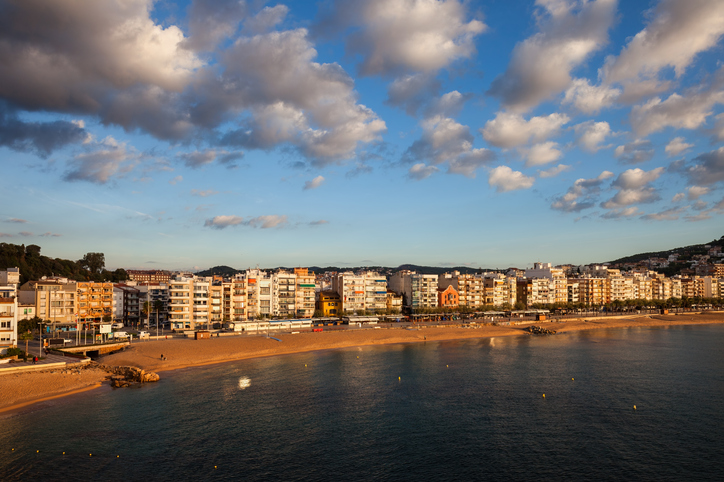
Buying property in Spain, and particularly on the Costa Brava, represents a dream for many British and international investors. Geographical proximity, a Mediterranean climate, an exceptional quality of life, and attractive rental yields are irresistible arguments. However, behind this idyllic postcard lie legal, fiscal, and administrative traps that can turn this dream into a financial and legal nightmare.
At IMMO 365 Costa Brava, we have been supporting international buyers for nearly 50 years in their property acquisitions in Roses, Empuriabrava, Platja d'Aro, and Cadaqués. Our experience allows us to state that a vast majority of the problems encountered by foreign investors result from avoidable errors, often committed due to a lack of knowledge regarding the specificities of the Spanish real estate system. This comprehensive guide lists the most common mistakes and provides you with the keys to securing your investment on the Costa Brava.
Why Does Buying Property in Spain Differ from the UK?
Fundamentally Different Legal Systems
The primary mistake, from which all others stem, is assuming that buying property in Spain works the same way as in the UK, France, or Switzerland. This erroneous presumption costs unprepared foreign buyers hundreds of thousands of pounds every year.
The role of the Spanish notary differs radically from that of their British or French counterparts. In many countries, the notary or solicitor assumes an extensive advisory and oversight role: they verify the title history over several decades, ensure there are no easements or debts, check urban planning compliance, and certify the entire transaction. In Spain, the notary is essentially limited to authenticating the parties' signatures and verifying their legal identity. They do not carry out the in-depth legal checks that international buyers are accustomed to.
This fundamental difference places the buyer in a position of exclusive responsibility regarding the vetting of the property. A standard clause in Spanish sales deeds states that the buyer declares to be perfectly aware of the legal, urban planning, and physical situation of the property. This contractual mention makes it extremely difficult, if not impossible, to take any subsequent action against the seller for withholding information. In other words, in Spain, the adage "buyer beware" (caveat emptor) applies fully.
The Complexity of Regional and Local Competencies
Spain operates on a decentralised model granting significant powers to Autonomous Communities (such as Catalonia) and municipalities. This decentralisation generates significant regulatory and fiscal complexity. Urban planning rules, taxes on real estate transactions, and regulations on holiday rentals vary considerably from one region to another, and even from one town to another.
On the Costa Brava, this complexity is illustrated concretely. Catalonia applies specific tax rates (ITP at 10%), strict regulations on holiday rentals requiring HUT licences, and particular urban planning standards, especially in protected coastal areas. Furthermore, each municipality (Roses, Cadaqués, Platja d'Aro) has its own urban planning schemes defining buildable zones, authorised densities, and permitted uses.
Errors Before Signing: The Crucial Verification Phase
Mistake No. 1: Failing to Obtain the NIE Early Enough
The NIE (Número de Identificación de Extranjero) is the mandatory tax identification number for any foreigner carrying out a real estate transaction in Spain. Without this number, it is impossible to sign a notarial deed. Obtaining the NIE takes a variable amount of time depending on the chosen procedure and the time of year.
The classic mistake is underestimating this delay. During the summer or at the end of the year, Spanish consulates abroad can have appointment wait times of 6 to 8 weeks. Once the appointment is held and the file submitted, administrative processing adds a further 2 to 4 weeks. In total, allow for 2 to 3 months in the least favourable cases. This delay blocks the entire transaction, risking the loss of the desired property and the deposit paid if the seller sets a deadline.
The solution is to anticipate this step as soon as you begin your property search. It is possible to obtain the NIE either via the Spanish consulate in your home country (a slow but free procedure) or directly at a Spanish police station with a prior appointment (a faster procedure but requiring travel). For urgent transactions, some Spanish lawyers can obtain an accelerated NIE via power of attorney and specific fees.
Mistake No. 2: Neglecting the Verification of the Property's Legal Status
This mistake, the most frequent and costly, actually encompasses several oversights that can individually or cumulatively ruin an investment. In Spain, debts are attached to the property and not to the person of the owner. Specifically, if the seller has accumulated local tax debts (unpaid IBI), unpaid community charges, or outstanding mortgages, these debts will be transferred to the buyer along with the property.
The Nota Simple Informativa, a document issued by the Property Registry (Registro de la Propiedad), provides essential information about the property: the identity of the registered owner, the exact cadastral description, registered charges and mortgages, and any easements. This document must imperatively be requested BEFORE signing any reservation contract (contrato de arras) and must be dated less than 15 days at the time of the final signing.
The Cédula de Habitabilidad (habitability certificate) certifies that the property is intended for residential use and that it respects minimum habitability standards. The absence of this document can mean either that it is a commercial premises illegally converted into a dwelling, or that the construction was carried out without a building permit. This certificate has a validity of 15 years and must be renewed. Its absence or expiration constitutes a major red flag.
Practical case on the Costa Brava: In 2023, an international investor acquired a villa in Cadaqués without checking the Cédula de Habitabilidad. It turned out that the rear part of the villa (30% of the surface area) had been built without a permit in the 1990s. The municipality, alerted during a renovation request, issued a partial demolition order. The owner had to incur considerable legal fees and eventually demolish the extension, losing both living space and asset value.
Mistake No. 3: Ignoring the Urban Planning Specificities of the Costa Brava
The Costa Brava, due to its exceptional natural beauty and environmental fragility, is subject to strict urban planning and environmental protections. Many sectors are classified as non-buildable zones (suelo no urbanizable) or subject to particular restrictions: flood zones, coastal protection zones (Ley de Costas), or protected natural spaces (PEIN - Plans for Spaces of Natural Interest).
A frequent mistake is buying a property located in a protected zone without understanding the implications. These restrictions can totally prohibit any extension or modification, severely limit authorised works, or even, in extreme cases, call into question the very legality of old constructions. Properties located within the 100-metre strip of the maritime public domain (protection easement zone) are subject to drastic limitations and can in some cases be involved in demolition procedures.
Verifying the municipal urban planning scheme (Plan General de Ordenación Urbana - PGOU) and the cadastral classification of the property is a mandatory step. This verification must be carried out by a professional (specialised lawyer or architect) capable of interpreting technical documents and measuring the concrete implications for your project.
Mistake No. 4: Underestimating Acquisition Costs
Many foreign buyers discover with shock the extent of the secondary costs associated with property acquisition in Spain. These costs, which are added to the purchase price, represent between 10% and 15% of the property price depending on whether it is new or existing. This budgetary underestimation can block final financing and compromise the transaction.
For a resale property in Catalonia (the most frequent case on the Costa Brava), costs include ITP (Impuesto de Transmisiones Patrimoniales - property transfer tax) at a rate of 10% of the sales price (2025 rate in Catalonia), notary fees ranging from 0.5% to 1% depending on the price, registration fees at the Property Registry (approximately 0.3% to 0.5%), lawyer's fees (generally between 1% and 2% of the price), and potentially gestoría fees (about 300 to 500 euros).
For a new property, the tax structure differs: VAT (IVA) at 10% of the price, AJD (Stamp Duty on Documented Legal Acts) between 1% and 1.5% depending on the region, and the same notary, registration, and lawyer fees as for resale. The total of VAT + AJD + other fees can reach 13% to 14% of the purchase price.
Concrete example: For a villa in Roses at 300,000 euros (resale), budget 30,000 euros for ITP, 2,000 euros for notary, 1,500 euros for registration, 4,500 euros for a lawyer (1.5%), totalling 38,000 euros in costs, bringing the total investment to 338,000 euros. This financial reality must be integrated from the start into your financing plan.
Mistake No. 5: Visiting Only During High Season
This seemingly trivial mistake can have significant consequences for your future satisfaction. Visiting Platja d'Aro or Roses in July-August gives a totally biased image of the property's environment. The seaside resorts of the Costa Brava experience considerable summer crowds, radically transforming the atmosphere, noise levels, availability of services, and road traffic.
A property located in a quiet and charming street in May can prove to be noisy and saturated in August. A heavenly beach in September becomes crowded and noisy in July. A quality restaurant that you would visit regularly might be closed 8 months a year. These elements impact your quality of life if you plan to use the property as a primary or regular secondary residence.
The professional recommendation is to visit the property AND its environment several times, ideally during different seasons. For pure rental investors, a visit in the mid-season (May-June or September-October) provides a more realistic view of the area's attractiveness outside the summer peak. For future permanent or semi-permanent residents, a winter visit (January-February) reveals the true nature of the place and the activity (or lack thereof) in the low season.
Contractual Errors: Securing the Transaction
Mistake No. 6: Signing a Contrato de Arras Without Sufficient Protection
The Contrato de Arras (deposit or reservation contract) constitutes the first binding contractual stage of a Spanish property purchase. Upon signing this contract, the buyer pays a deposit generally between 5% and 10% of the sales price. This contract legally binds the parties and sets the conditions for the final sale.
The fatal mistake is signing a "penitential" type Contrato de Arras (arras penitenciales) without sufficient protection clauses. In this type of contract, if the buyer withdraws from the purchase, they lose the entire deposit paid. If the seller withdraws, they must return double the deposit. This mechanism seems fair in appearance but exposes the buyer to a major risk: losing their deposit if legal or urban planning problems are discovered late, making the purchase impossible or unreasonable.
The professional solution is to demand either a "confirmatory" Contrato de Arras (arras confirmatorias) including protective suspensive clauses, or a penitential contract but with explicit exit clauses. These suspensive clauses must cover, at a minimum, the obtaining of bank financing under the expected conditions (rate, amount, duration), the absence of undisclosed charges, debts, or mortgages discovered during verifications, full urban planning compliance of the property, and for properties intended for holiday rental, obtaining the HUT licence.
At IMMO 365 Costa Brava, we systematically recommend that our clients have any Contrato de Arras reviewed by an independent lawyer BEFORE signing. This precaution, which costs a few hundred euros, avoids disputes that could cost tens of thousands.
Mistake No. 7: Accepting the "In-House" Lawyer
Conflict of interest is one of the most insidious traps of buying property in Spain. When a real estate agency, a developer, or even a seller "recommends" or "offers" you the services of a lawyer they know well and work with regularly, be wary. This professional, however technically competent they may be, will necessarily have a divided loyalty, and often a privileged one towards the party that regularly brings them work.
A truly independent lawyer will not hesitate to block a transaction or demand additional guarantees if verifications reveal problems. A lawyer in a conflict of interest situation will minimise risks to avoid "killing" the sale, thus prioritising the interests of the seller or the agency over yours. This distinction may seem subtle, but its financial consequences are considerable.
The golden rule: choose your lawyer YOURSELF, in total independence, based on personal recommendations from owners already settled, expat forums, or professional bodies. Opt for an English-speaking lawyer specialising in Spanish real estate law, ideally based locally (Girona for the Costa Brava) and familiar with regional specificities. Accept paying slightly higher fees to guarantee this total independence.
Mistake No. 8: Neglecting the Oversight of the Non-Resident Seller
When the seller is a non-resident for Spanish tax purposes (which includes many international owners selling their secondary residence), Spanish legislation requires the buyer to withhold 3% of the sales price and pay it directly to the Spanish Treasury (Hacienda). This withholding constitutes a down payment on the capital gains tax that the seller will have to pay later.
The common mistake is paying 100% of the price to the seller without performing this 3% withholding. In this case, the Spanish tax administration will turn against the buyer to claim this amount, plus late payment interest and penalties. For a villa at 400,000 euros, this represents 12,000 euros that the buyer will have to pay out of their own pocket if the withholding was not carried out.
The correct procedure involves the notary calculating and withholding the 3%, establishing a Modelo 211 (specific tax form), and paying this sum to the Treasury within a very short timeframe (generally within 30 days). The buyer must imperatively check that the notary carries out these steps and keep the justifications. If in doubt about the seller's tax status (resident or non-resident), demand written clarification before signing.
Financing Errors: Optimising the Mortgage
Mistake No. 9: Accepting a Variable Rate Loan Without Protection
The Spanish mortgage market mostly offers variable rate loans (tipo de interés variable) indexed to the Euribor with a fixed bank margin. These loans have the advantage of an attractive initial rate but expose the borrower to a major risk of rising monthly payments if interest rates go up.
The mistake is accepting a variable rate loan without a capping clause (cláusula de limitación or suelo y techo - floor and ceiling). Between 2021 and 2023, the Euribor went from -0.5% to +4%, leading to an explosion in monthly payments for unprotected borrowers. For a 200,000 euro loan over 20 years, this variation could increase monthly payments by 400 euros per month, putting many households in difficulty.
Alternative solutions exist. Fixed-rate loans (tipo de interés fijo), although offering a slightly higher initial rate, totally secure the monthly payments over the entire duration. Mixed-rate loans (tipo de interés mixto) combine an initial fixed-rate period (generally 10 years) followed by a variable rate, offering an interesting compromise. In 2025, given persistent economic volatility, experts mostly recommend fixed or mixed formulas for residential acquisitions.
Mistake No. 10: Allowing an Oversized Life Insurance Policy to Be Imposed
Spanish banks generally make the granting of a mortgage conditional on the subscription of a life insurance policy (seguro de vida) covering the borrowed capital. This requirement, legitimate in itself, becomes problematic when the bank imposes its own insurance product at excessive price conditions and with disproportionate guarantees.
The mistake is passively accepting this insurance without negotiation or comparison. The surcharges applied by banks on their internal life insurance can represent a 40% to 60% extra cost compared to equivalent external insurance. Over the total duration of a loan, this gap amounts to thousands of euros.
Spanish legislation allows you to freely choose your life insurance policy (principle of free choice of insurance - libertad de elección del seguro), provided it offers guarantees at least equivalent to those proposed by the bank. This legal provision, stemming from a European directive, often remains unknown or deliberately obscured by bank advisors who prioritise their commercial objectives.
The optimal strategy is to compare life insurance offers dedicated to mortgages proposed by independent insurers or specialised brokers. These contracts generally offer rates 30% to 50% lower than those of banks. Then present these quotes to the bank, demanding the acceptance of this external insurance. In case of refusal, this discrimination constitutes an abusive commercial practice that you can contest with the bank's customer service (Servicio de Atención al Cliente) and then with the Bank of Spain (Banco de España).
Holiday Rental Specifics on the Costa Brava
Mistake No. 11: Buying Without Checking the Possibility of Obtaining an HUT Licence
If your real estate project incorporates a holiday rental dimension, obtaining an HUT licence (Habitatge d'Ús Turístic) in Catalonia has been an absolute prerequisite since 2012. This licence, issued by the Generalitat de Catalunya after verifying compliance with strict technical and urban planning standards, conditions the legality of any holiday rental activity.
The catastrophic mistake is buying a property assuming that obtaining this licence will be a simple administrative formality, only to discover later that the property is ineligible. Since November 2023, Catalonia has drastically tightened the conditions for granting them by establishing a maximum ratio of 10 tourist accommodations per 100 inhabitants in 262 municipalities, including many Costa Brava towns (Roses, Cadaqués, Platja d'Aro, Sant Feliu de Guíxols).
With municipal quotas often met or close to saturation, new requests are frequently refused. Furthermore, some areas (historic centres, certain residential neighbourhoods) are subject to total bans on new licences. Finally, since April 2025, homeowners' associations have the power to prohibit holiday rentals by a 60% majority vote.
The pre-purchase verification must cover several points. Contact the town hall (ayuntamiento) to find out the municipal quota and the number of licences already issued. Consult the statutes and minutes of the association meetings to identify any restrictions. Check that the property respects technical eligibility criteria (minimum surface area, mandatory equipment, valid habitability certificate). Prioritise buying properties already endowed with a transferable HUT licence, a solution that is admittedly more expensive at purchase but secures your rental project.
Mistake No. 12: Ignoring the Tax Obligations of Holiday Rentals
Operating a property for holiday rental generates specific tax obligations often underestimated by foreign investors. These rental incomes must be declared both in Spain and in your home country (for tax residents abroad), with double taxation avoidance mechanisms to be mastered.
En Spain, rental income for non-residents is subject to IRNR (Non-Resident Income Tax) at a rate of 19% (24% for residents of countries outside the EU/EEA). Expenses and depreciation are generally not deductible for non-residents operating holiday rentals, unlike long-term rentals. This non-deductibility heavily impacts real taxation.
In your country of residence, these same incomes must be declared and are taxable according to the progressive scale of income tax, with the possibility of deducting the Spanish tax already paid (tax credit mechanism provided by international tax treaties). Failing to declare in your home country constitutes tax fraud exposing you to adjustments, surcharges, and penalties.
The common mistake is declaring this income only in Spain, ignoring the home country obligation, or conversely, only declaring it at home while omitting Spanish obligations. The optimal strategy requires the support of an accountant mastering international tax law and capable of legally optimising your situation within the framework of international conventions.
Post-Acquisition Errors: Securing Your Investment
Mistake No. 13: Neglecting Registration at the Property Registry
After signing the public deed (escritura pública), many buyers wrongly consider the transaction to be definitively secured. However, full legal security is only acquired with the registration of the deed at the Property Registry (Registro de la Propiedad). This registration, although not strictly legally mandatory, proves absolutely indispensable in practice.
As long as the property is not registered in your name at the Registry, you remain vulnerable. An unscrupulous seller could theoretically sell the same property twice, and in the absence of registration, the principle of temporal priority applies: the first buyer to register becomes the legitimate owner, even if they bought second. The seller's creditors could also have seizures registered against the property if your acquisition is not yet registered.
Registration generally takes place within 2 to 4 weeks after the notarial signing. The notary transmits the deed to the Registry, which proceeds with regulatory verifications before final inscription. The registration fees (about 0.3% to 0.5% of the price) are well worth paying for this absolute legal security. Demand that your notary or lawyer provides you with written confirmation of the effective registration (nota simple actualizada) mentioning your name as the registered owner.
Mistake No. 14: Forgetting Mandatory Post-Purchase Procedures
Acquiring real estate in Spain triggers several administrative obligations that new foreign owners frequently omit, exposing themselves to sanctions and later complications.
Changing the title holder of utility contracts (water, electricity, gas) must be done quickly. As long as these contracts remain in the name of the former owner, you risk untimely cuts if they cancel them, and in case of unpaid bills prior to your acquisition, you could be held jointly responsible. Contact the companies as soon as you sign to establish the contracts in your name, providing a copy of the notarial deed.
The bank direct debit for IBI (Impuesto sobre Bienes Inmuebles - property tax) and community charges avoids payment omissions that can generate late surcharges and, in extreme cases, forced recovery procedures. IBI in Spain is not collected automatically: it is up to the owner to pay spontaneously or set up a direct debit. Unpaid community charges constitute a debt attached to the property for which you would be liable.
Declaring the property to the tax services in your home country is also required in many jurisdictions. Failing to do so can lead to fines. This tax obligation is often overlooked and exposes offenders to penalties proportional to the value of the undeclared property.
Professional Support: The Key to Success
Mistake No. 15: Wanting to Do Everything Alone to "Save Money"
The temptation to manage one's property acquisition in Spain alone to avoid professional fees paradoxically constitutes the most expensive mistake in the long term. The fees of a specialised lawyer (1% to 2% of the price) may seem high, but they represent insurance against errors that could cost 10 to 50 times more.
Statistics compiled by Spanish consumer associations reveal that over 40% of foreign buyers who proceeded without professional legal support encounter post-acquisition problems: discovery of undisclosed debts, disputes with communities, urban planning non-compliance, or the impossibility of obtaining intended licences. The average cost of resolving these problems far exceeds the lawyer fees initially "saved".
A lawyer specialising in Spanish real estate law, ideally English-speaking, carries out exhaustive legal verifications (Nota Simple, Cédula de Habitabilidad, urban planning compliance, community statutes), negotiates and drafts protective clauses in the Contrato de Arras, represents you during the notarial signing by explaining each clause, checks that the 3% tax withholding on non-resident sellers is correctly performed, and supervises the registration at the Property Registry.
At IMMO 365 Costa Brava, we collaborate with a network of specialised, English-speaking, independent, and experienced lawyers whom we systematically recommend to our clients. This collaboration between an expert local real estate agent and a specialised lawyer constitutes the winning duo for a secure acquisition on the Costa Brava.
FAQ: Your Questions on Buying Property in Spain
Do I really need a lawyer to buy in Spain?
Yes, absolutely, and this recommendation is not a simple piece of advice but an imperative necessity. Unlike some countries where the notary ensures a protective role for the buyer, in Spain, the notary is limited to authenticating signatures and verifying the identity of the parties. It is the buyer who bears full responsibility for the property check. A lawyer specialising in Spanish real estate law carries out all indispensable legal and urban planning verifications: Nota Simple, Cédula de Habitabilidad, urban planning compliance, absence of debts, and community statutes. Lawyer fees (1% to 2% of the price) constitute insurance against mistakes that could cost tens of thousands. Statistics show that over 40% of foreign buyers without legal support encounter post-acquisition problems. At IMMO 365 Costa Brava, we systematically recommend that our clients use an independent English-speaking lawyer whom we can recommend from our trusted partner network.
What are the real costs of buying property in Spain?
Acquisition costs in Spain represent between 10% and 15% of the purchase price depending on whether the property is new or existing. For a resale property in Catalonia (the majority case on the Costa Brava), allow for ITP (Property Transfer Tax) at 10% of the sales price in 2025, notary fees between 0.5% and 1%, registration fees at the Property Registry about 0.3% to 0.5%, and lawyer fees generally between 1% and 2%. Total: approximately 12% to 14%. For a new property, the structure differs with VAT (IVA) at 10%, AJD (Stamp Duty) between 1% and 1.5%, plus the same notary, registration, and lawyer fees, making a total of 13% to 15%. Concrete example: for a villa at 300,000 euros in Roses (resale), plan for 30,000 euros of ITP + 2,000 euros for notary + 1,500 euros for registration + 4,500 euros for a lawyer = 38,000 euros in costs, bringing the total investment to 338,000 euros. This financial reality must be integrated from the start into your budget.
Can I get a mortgage as a non-resident?
Yes, Spanish banks grant mortgages to non-residents, but conditions are significantly more restrictive than for residents. Non-residents must generally provide a personal down payment of 30% to 40% of the price (compared to 20% for residents), the maximum duration is limited to 20-25 years (compared to 30 years for residents), and the applied rates are slightly higher (a surcharge of 0.3% to 0.5%). Banks also require reinforced guarantees: income domiciliation, life and home insurance taken with them, and a personal guarantee. The borrowable amount is calculated based on your net income, with a maximum debt ratio of 35% to 40%. The main Spanish banks granting loans to non-residents include CaixaBank, Banco Sabadell, Banco Santander, and BBVA. A specialised broker can compare offers and negotiate the best conditions. Prepare a solid file: proof of income for the last 3 years, bank statements, tax returns, and proof of the available down payment.
Is the 3% withholding on non-resident sellers really mandatory?
Yes, this withholding is absolutely mandatory and failure to comply exposes the buyer to heavy financial consequences. When the seller is a non-resident for Spanish tax purposes (which includes international owners selling their secondary residence), Spanish law requires the buyer to withhold 3% of the sales price and pay it directly to the Spanish Treasury (Hacienda) via the Modelo 211 form, within 30 days following the signing. This withholding constitutes a down payment on the capital gains tax that the seller must later settle. If the buyer pays 100% of the price to the seller without performing this withholding, the tax administration will turn against the buyer to claim this amount, plus late payment interest and penalties. The buyer must check that the notary or lawyer carries out this retention and provides the proof of payment to the Treasury. In case of doubt regarding the seller's status, always request a certificate of tax residence issued by the Spanish Hacienda before signing.
How do I know if I can obtain an HUT licence to rent my property?
Verifying the possibility of obtaining an HUT licence (Habitatge d'Ús Turístic) must imperatively be done BEFORE the purchase, as the impossibility of obtaining this licence would ruin your rental project. Several verifications are necessary. Contact the urban planning department of the town hall (ayuntamiento) where the property is located to find out the municipal quota of authorised licences and the number already issued. Since November 2023, Catalonia imposes a maximum ratio of 10 tourist accommodations per 100 inhabitants in 262 municipalities including Roses, Cadaqués, Platja d'Aro. If the quota is met, new licences will no longer be issued. Check that the precise geographical area of the property is not subject to a total ban (historic centres, certain residential neighbourhoods). Consult the statutes and minutes of the association meetings because since April 2025, homeowners' associations can prohibit holiday rentals by a 60% vote. Ensure that the property respects technical criteria: minimum surface area, valid Cédula de Habitabilidad, mandatory equipment. The safest solution consists of prioritising the purchase of properties already endowed with a transferable HUT licence, thus securing your project.
What are the specifics of buying property on the Costa Brava?
The Costa Brava presents regulatory and environmental particularities that deserve specific attention. Many sectors are classified as protected zones (PEIN - Plans for Spaces of Natural Interest, Natura 2000 zones) imposing strict restrictions on modifications, extensions, or reconstructions. The Ley de Costas (Coastal Law) subjects properties located within 100 metres of the maritime public domain to drastic limitations. Municipal urban planning schemes (PGOU) vary significantly from one town to another, with many non-buildable zones (suelo no urbanizable). Holiday rental regulations are particularly strict in Catalonia with the obligation of an HUT licence and municipal quotas. Old constructions (1960s-1980s) may present urban planning compliance problems, some having been built before the establishment of current urban planning schemes. Flood zones (INUNCAT zones) affect several sectors, notably in Roses and Empuriabrava. At IMMO 365 Costa Brava, our 50 years of local expertise allow us to identify these specifics for each property and advise our clients accordingly, avoiding unpleasant post-acquisition surprises.
How much time should I allow to finalise a property purchase in Spain?
The total time between the first interest and the final signing at the notary generally varies between 2 and 4 months, depending on the complexity of the file and the speed of obtaining administrative documents. Here is the typical timeline for an acquisition on the Costa Brava. Search and visit phase: 2 to 6 weeks depending on your availability and the market. Obtaining the NIE: 1 to 3 months if you do not already have one (anticipate this step). Signing the Contrato de Arras (reservation contract): upon agreement on price and conditions. Legal checks by the lawyer: 2 to 4 weeks to obtain and analyse all documents (Nota Simple, Cédula, urban planning compliance, etc.). Obtaining bank financing if necessary: 3 to 6 weeks between filing and final agreement. Signing the notarial deed: as soon as all conditions are met. Registration at the Property Registry: 2 to 4 weeks post-signing. Deadlines can be shortened for cash purchases without financing and with an NIE already obtained (6 to 8 weeks total). Conversely, they lengthen in case of legal complications, financing problems, or summer administrative slowdowns. At IMMO 365 Costa Brava, our experience allows us to optimise these timelines by anticipating steps and effectively coordinating all parties.
Do I have to declare my Spanish property in my home country?
Yes, absolutely, and this obligation concerns all tax residents owning property abroad, whether this property generates income or not. The declaration is made via various forms depending on your situation. In many jurisdictions, you must mention any property held abroad even if it does not generate rental income. Failure to comply with this obligation exposes you to fines. If the property generates rental income, this income must be declared and is taxed according to the progressive scale of income tax. Spanish tax already paid on this income is deductible in your home country via the tax credit mechanism provided by international tax treaties. Upon resale, the capital gain on the property is taxable in your home country, with the application of deductions for the duration of ownership. An accountant mastering international tax law can optimise your situation while respecting your legal obligations.
IMMO 365 Costa Brava supports you in your property acquisition project in Roses, Empuriabrava, Platja d'Aro, and Cadaqués. With nearly 50 years of experience and deep knowledge of the local market, we secure your investment by helping you avoid all the common mistakes detailed in this guide. Our international team masters all the legal, fiscal, and administrative subtleties of buying property in Spain.
We collaborate with a network of trusted professionals (independent English-speaking lawyers, notaries, accountants, property managers) to offer you complete A to Z support. Our service includes the selection of properties compliant with your criteria and budget, the prior legal and urban planning audit of each property, introduction to an independent English-speaking lawyer, optimal negotiation of price and conditions, support in obtaining the NIE and financing, and post-acquisition follow-up for all administrative procedures.
Discover our selected and compliant properties at https://immo365costabrava.com/en and invest with total peace of mind on the Costa Brava.
Contact us today for a free initial discussion about your property purchase project in Spain and avoid all the mistakes that cost unassisted buyers dearly.
Please complete the form by clicking below and our advisers will get back to you as soon as possible to discuss your project.
You can also contact us at +34 872 268 850